You stand in front of a running line. Press, robot cell, fast conveyor. You know it needs guarding, but do you go with a fixed fence, a door with safety interlock, or a safety light curtain?
Let’s walk through it in simple language, using real shop-floor scenes and some examples from NEW STAR’s product range.
Overview of machine guarding: fixed guard, safety interlock and safety light curtain
For most safety standards and risk assessments, the logic is:
Fixed guard – physical barrier, bolted in place.
Safety interlock guard – door or cover with interlock switch.
Safety light curtain – opto-electronic presence sensing around the danger zone.
You start with the question:
Can we totally block access to the hazard with metal?
If not, do people need to walk in or just reach in?
How often will they go in—once a shift or every 5 seconds?
NEW STAR fits into this picture as a one-stop machine safety sensors manufacturer:
When to use safety interlock switches on doors and gates
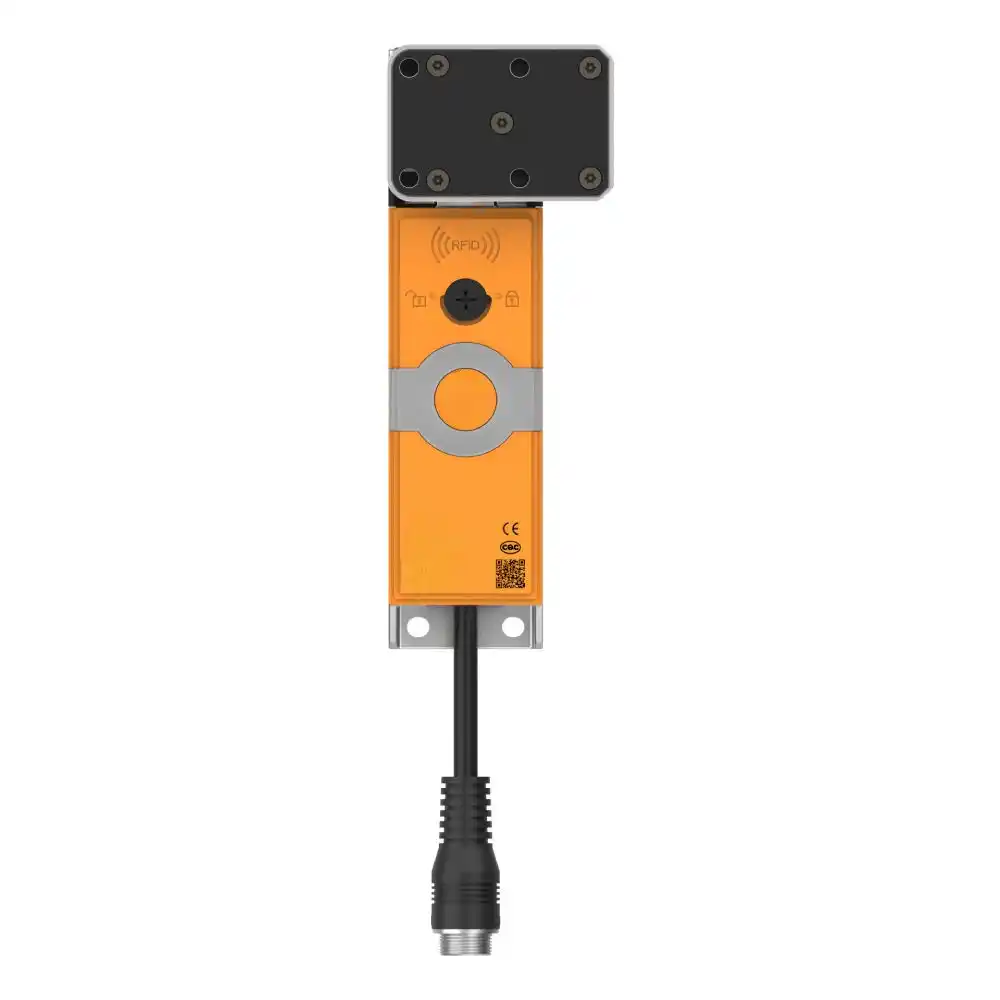
Safety interlock switches make sense when people actually walk into the cell or stick most of their body inside.
Typical use cases:
Robot cells with sliding or swing gates
Injection molding machines with large front doors
Die-casting machines, CNC cells, welding booths
Any time you have a “walk-in” area that must stop before you enter
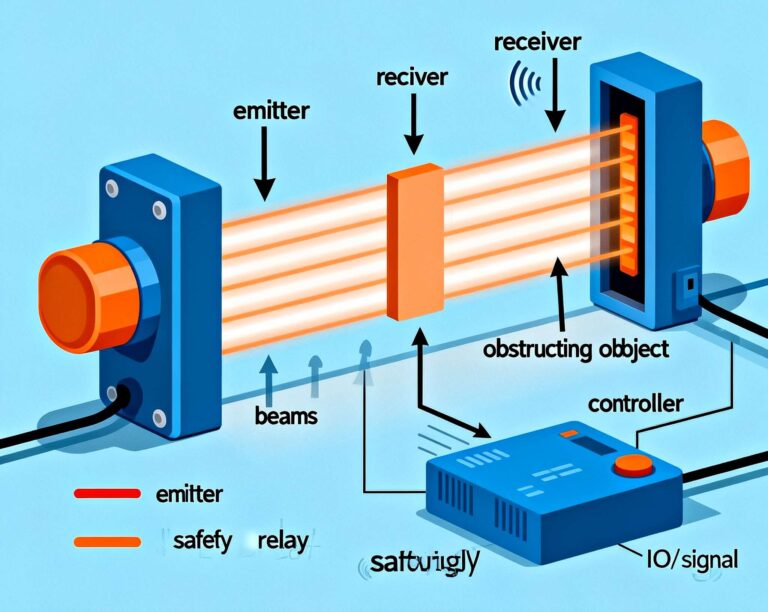
You mount an interlock on the door and wire it through a safety relay or safety controller. Door open = machine must stop or stay stopped. Door closed and reset = machine can run.
NEW STAR covers this with the Safety Device family: safety interlock switches plus safety relays.
Why interlocks are a good choice
Very clear for operators: door open means “safe to go in.”
Good fit for higher Performance Levels when wired right.
Easy to include in your lockout/tagout and EHS procedures.
Things to watch
Classic bypass tricks: spare key in the door, magnet taped over the sensor, bridge wire.
Mechanical wear: hinges sag, cams misalign, then you get nuisance trips.
If the guard has big openings, somebody can still reach in while the door is “closed”.
Safety interlock switches on robot cells and injection molding machines
Two quick scenes:
Robot palletizing cell
Fixed fence on three sides
Sliding access door with dual-channel safety interlock
Sometimes plus a safety scanner watching the rear of the robot
Injection molding machine
Large front door with monitored safety interlock
Rear guards fixed, maybe with maintenance-only access
Light curtain only for special operating modes or semi-automatic loading
Here the interlock handles full-body access, while other sensors are just extra layers.
When to use safety light curtains for presses, robots and conveyors
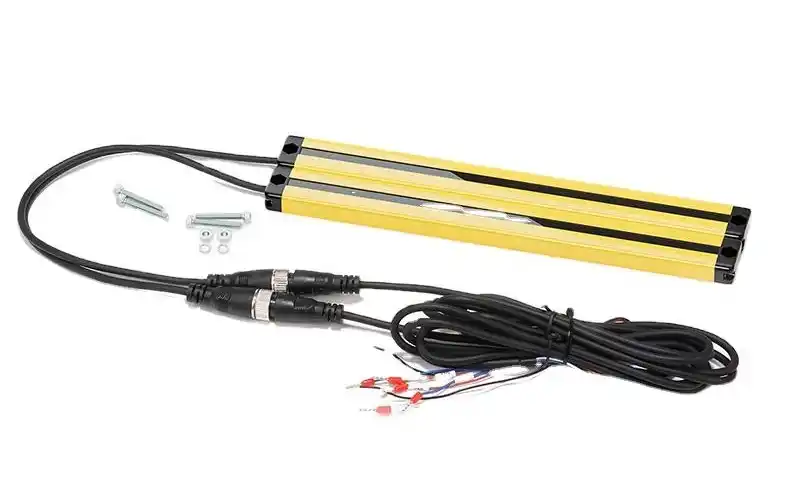
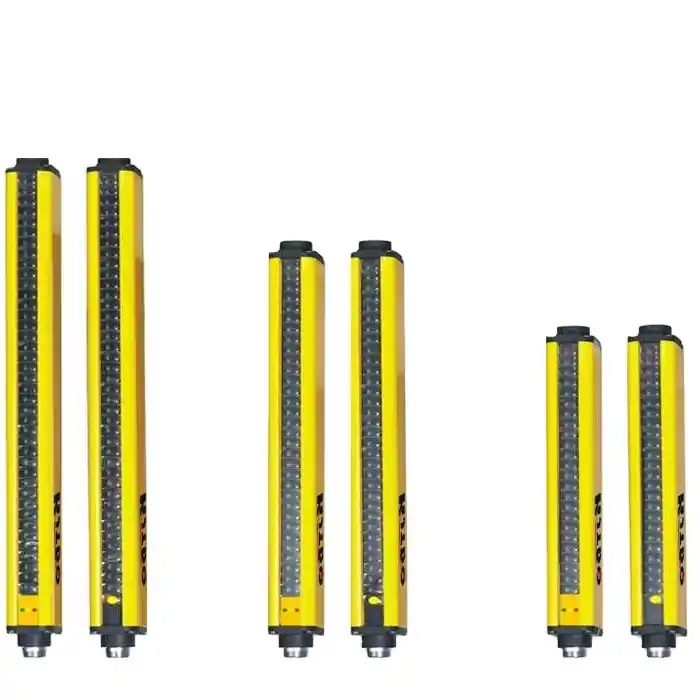
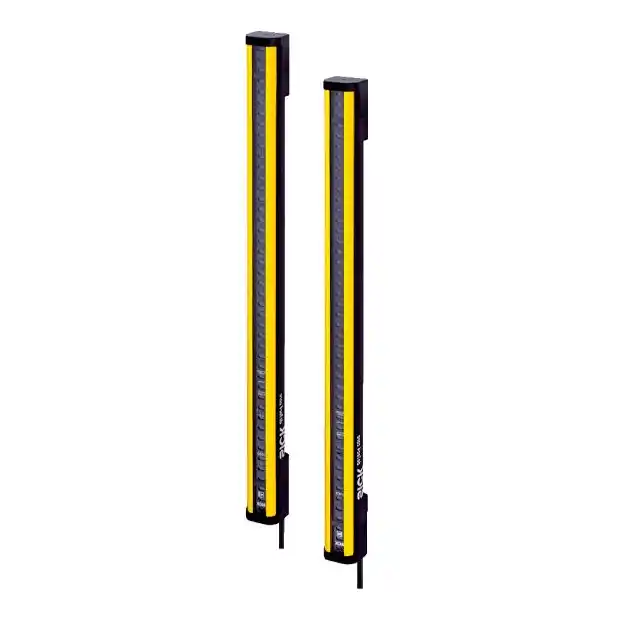
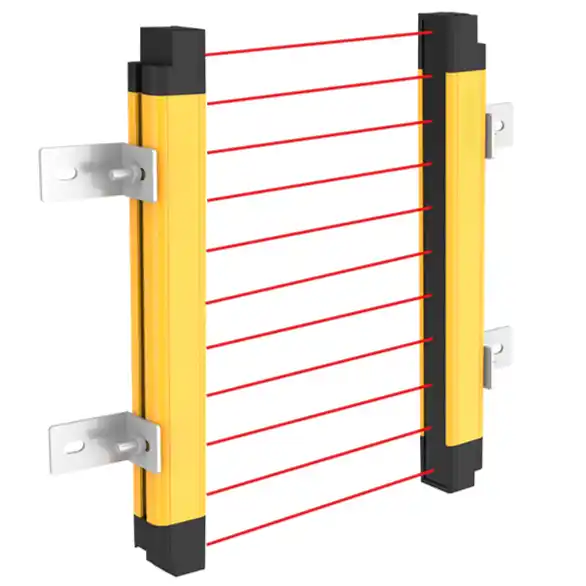
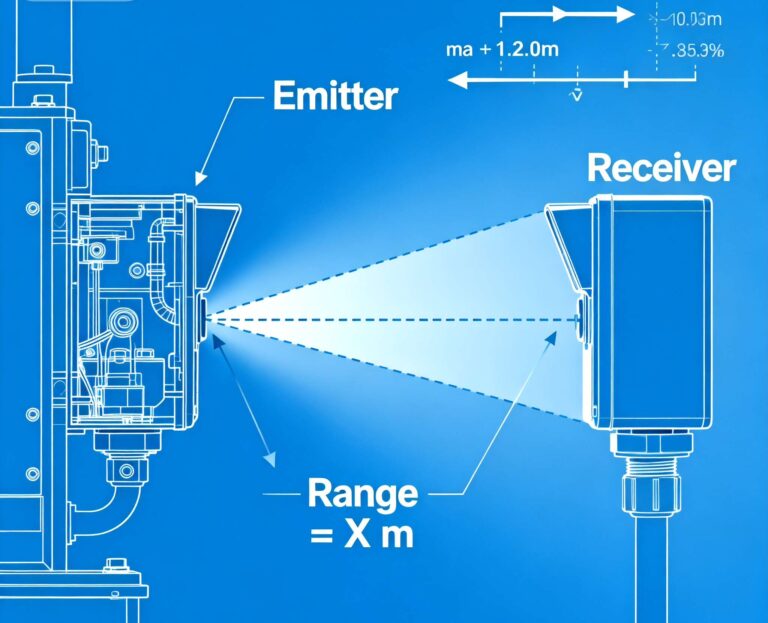
Safety light curtains use rows of infrared beams between transmitter and receiver. If your hand, body or a pallet breaks the beams, the OSSD outputs go low and the machine must stop.
They shine when you need open access plus safe stop:
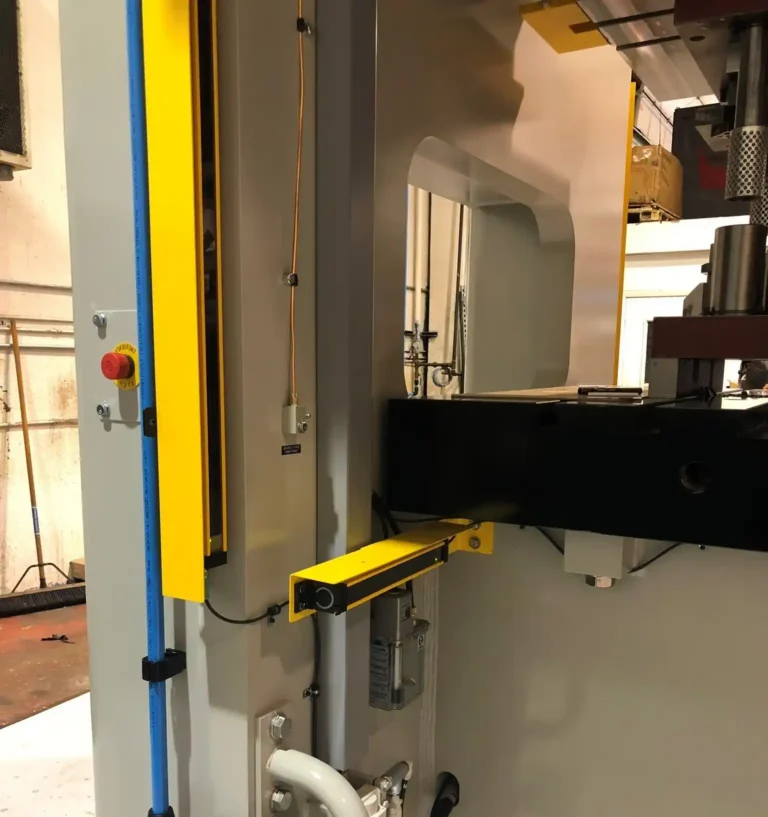
Hand-fed presses and press brakes
Assembly and 3C electronics lines with frequent jig or product change
Packaging and logistics equipment where operators clear jams all the time
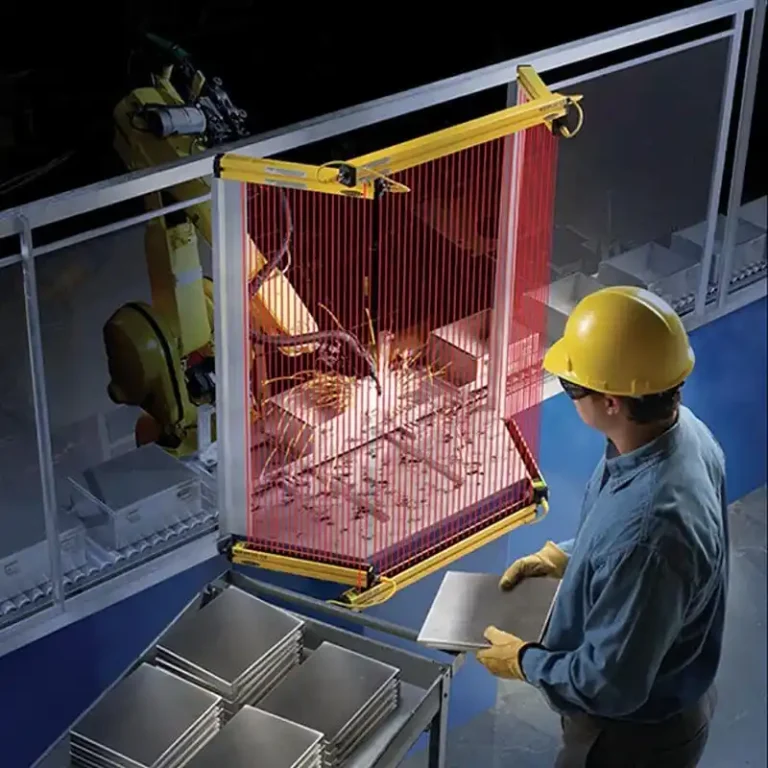
Robot load/unload stations where people don’t walk deep in the cage
Conveyor infeed and outfeed points near diverters or pushers
Operators walk along the conveyor, clear jams, rework boxes. They don’t want to open a gate every 20 seconds. Here the safety light curtain is basically a virtual gate.
Multi-sided access protection vs single-side guarding with light curtains
Some machines need more than one side covered:
Robot cells where you have multiple pallet stations
Wood and panel lines where workers can enter from several sides
Long metal processing equipment with side loading
In that case you go for multi-sided access protection:
Cascaded curtains in an L or U shape
One safety function covering several angles
Clean wiring back to the controller
Single-side guarding with a single curtain is still fine for:
Stand-alone presses and brakes
Benchtop assembly machines
Simple conveyor ends
Safety light curtain vs fixed guard vs safety interlock comparison table
Here’s a quick table you can drop inside your product page or blog post:
Guarding method
Best for
Safety coverage
Main advantages
Limits / watch-outs
Example NEW STAR hardware
Fixed guard
High-severity hazards with rare access (drives, saws, backs of presses, wood & panel lines)
Full physical barrier when designed correctly
Very high inherent protection, no electronics, low tamper chance
Poor ergonomics, slow changeover, uses floor space, not flexible for high-mix
User-built guards plus NEW STAR sensors as needed
Safety interlock guard
Robot cells, injection/press casting doors, CNC cells, walk-in zones
Blocks access during run; machine stops or stays stopped when door opens
Clear logic, good for high Performance Level with safety relay, easy to audit
Can be bypassed if not designed well, hinges and cams wear, reach-through possible
How NEW STAR machine safety sensors support your guarding strategy
Choosing between a safety light curtain, fixed guard, and safety interlock is not just a “parts list” decision. It affects:
How close your team can safely work
How often the line stops because of nuisance trips
How your next customer audit or insurer visit goes
NEW STAR positions as One-Stop Machine Safety Sensors Manufacturer | NEW STAR OEM. From Type 4 safety light curtains and measurement light curtains to safety interlock switches, photoelectric and flow sensors, you can cover:
Packaging and logistics equipment
Stamping and machine tools
Injection molding and die casting
Electronics assembly and robot systems
Woodworking, panel and metal processing
Automotive, 3C, battery, home appliance, pharma, food and beverage
If your layout is tricky or you’re running OEM machines, you can use their Custom Safety Light Curtain Solutions service for non-standard sizes, mounting or resolution. They handle both small runs and bulk orders for equipment builders.
A simple way to move forward:
Map hazards and needed Performance Level.
Decide where steel must be (fixed guards).
Put interlock doors where people walk in.
Use safety light curtains at the busy operator side, so the process stays smooth and safe.
Even a rough sketch plus “here the guy stands, here the robot moves, here the conveyor pinch point” is enough to start a real discussion and get a practical, customizable solution.